
Home
News and Resources
Collaboration, Context and Creative Possibility: Key Insights from Murray Arts Cultural Council
Collaboration, Context and Creative Possibility: Key Insights from Murray Arts Cultural Council
Regional communities may not always have an abundance of funding or infrastructure, but they possess something equally valuable: an abundance of possibilities. That was one of the key messages to emerge from the latest Murray Arts Cultural Council meeting, which featured an inspiring conversation with Lindy Hume and Andrew Gray from Crimson Rosella and Hothouse…
May 14, 2026
read
Share this post
Regional communities may not always have an abundance of funding or infrastructure, but they possess something equally valuable: an abundance of possibilities.
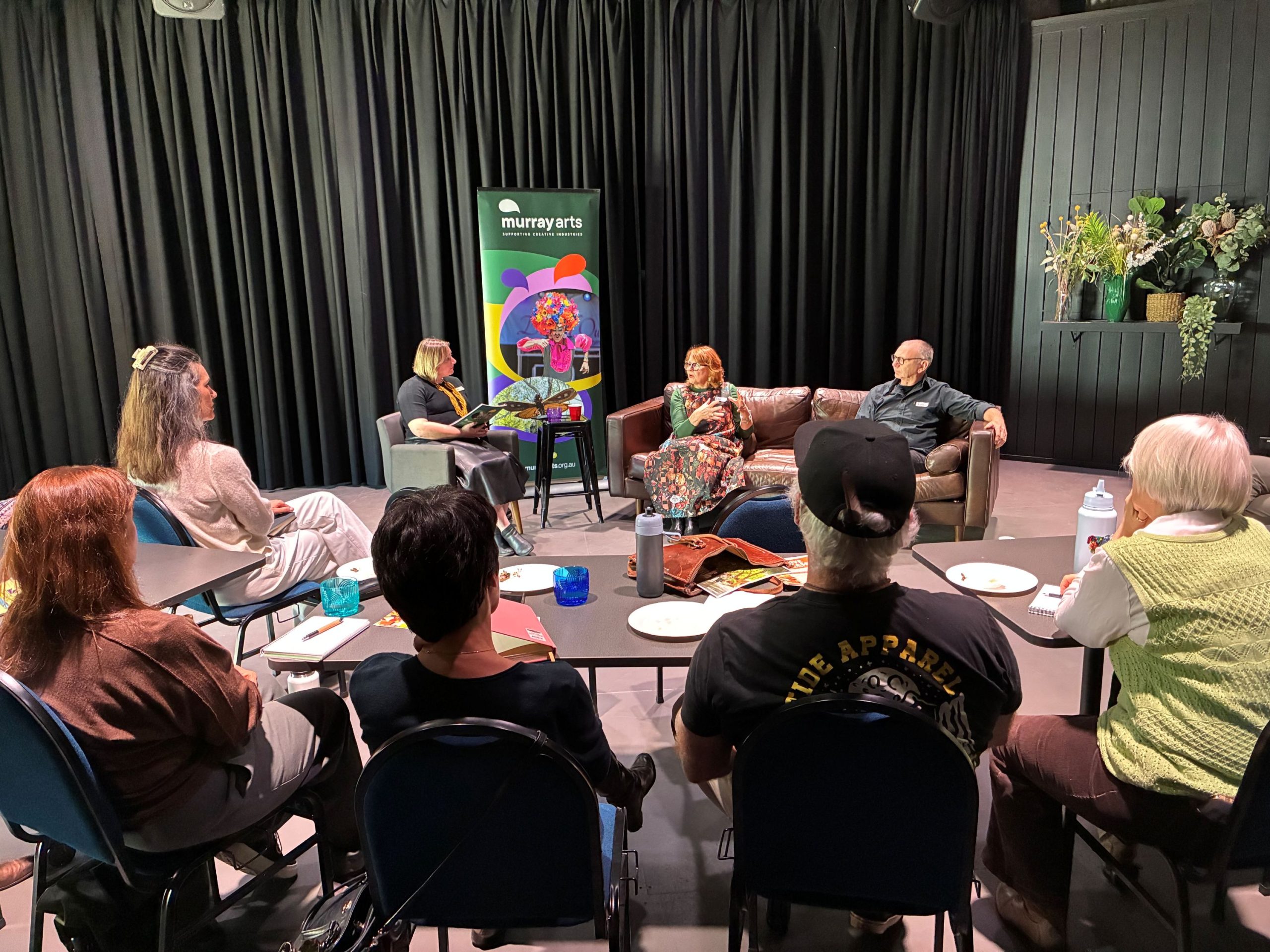
That was one of the key messages to emerge from the latest Murray Arts Cultural Council meeting, which featured an inspiring conversation with Lindy Hume and Andrew Gray from Crimson Rosella and Hothouse Theatre.
Hosted by Murray Arts Executive Director Lauren Black, the conversation explored the theme of collaboration—what it means, why it matters, and how regional communities are uniquely placed to create bold and meaningful partnerships.
Thinking in Landscapes, Not Portraits
One of the most thought-provoking ideas shared by Lindy Hume was the concept of “landscape-oriented thinking.”
Rather than focusing solely on an individual artist or project, landscape-oriented thinking encourages us to consider the wider context in which creative work takes place: the people, places, stories, industries and relationships that shape what is possible.
For regional communities, this perspective is especially powerful. Our landscapes, local histories and strong social connections are not constraints; they are rich creative assets that can inspire work with both local significance and global resonance.
Why Collaboration Flourishes in Regional Communities
Regional artists and organisations are often accustomed to achieving extraordinary outcomes with limited resources. This necessity has fostered a culture of resourcefulness, generosity and collaboration.
In regional areas, people frequently wear multiple hats—performing on stage, setting up venues, promoting events and building audiences. This creates a strong sense of ownership and participation that is less common in larger metropolitan settings.
As Andrew Gray noted, collaboration is more than a practical strategy for doing more with less. It is a way of building relationships, sharing knowledge and creating outcomes that would not be possible alone.
What Makes Collaboration Work?
The discussion highlighted that genuine collaboration is not simply a matter of dividing tasks and combining them at the end.
The most successful collaborations emerge when partners develop ideas together from the outset, allowing the work itself to evolve through a process of mutual listening and creative exchange.
Successful collaboration relies on:
- Generosity and selflessness
- Trust and respect
- Shared curiosity
- Openness to learning
- Willingness to relinquish control
When participants create space for others to contribute and shine, the final result can become far greater than the sum of its parts.
Finding Collaborators in Unexpected Places
Another thought provoking theme of the conversation was the importance of looking beyond traditional arts partnerships.
Opportunities for creative collaboration can be found in tourism, hospitality, universities, environmental initiatives, community health and business.
The arts are deeply connected to broader community goals, including social wellbeing, economic development and place-making. By identifying shared objectives and developing a common language, creative practitioners can unlock new possibilities and partnerships.
Arts and Cultural Tourism
The discussion also underscored the growing relationship between arts and tourism.
Authentic cultural experiences rooted in local stories and landscapes naturally attract visitors seeking meaningful connections with place. Festivals, exhibitions and performances can become powerful tourism drawcards while strengthening community identity.
This aligns closely with Murray Arts’ ongoing work in cultural tourism and efforts to connect the arts sector with regional visitor economies.
Circular Thinking and Shared Resources
Another important idea explored was the concept of the circular economy—a model that emphasises the sharing of resources, audiences, skills and infrastructure.
In many ways, regional arts communities already operate this way. Artists and organisations regularly share venues, knowledge, accommodation and promotional networks, creating stronger and more resilient ecosystems.
The lesson is clear: communities thrive when they recognise their interconnectedness and create opportunities for people from different sectors to come together around shared ideas.
A Region Rich in Possibility
Perhaps the most enduring message from the conversation was that regional communities should not define themselves by what they lack.
Instead, they can draw strength from what they already possess: extraordinary landscapes, passionate communities, authentic stories and a willingness to work together.
By embracing collaboration, thinking broadly and nurturing relationships across sectors, regional artists and organisations can create work that is both deeply rooted in place and capable of resonating far beyond their own communities.
Murray Arts extends its sincere thanks to Lindy Hume and Andrew Gray for sharing their insights, and to everyone who participated in this thoughtful and energising discussion.
A big thank you to the broader Hothouse Team for hosting the Cultural Council.
We encourage artists, organisations and community leaders across the region to reflect on where new collaborations might emerge and what unexpected partnerships could help bring their ideas to life.
Further reading from the cultural council discussion:
A Bigger Picture: Towards a landscape-oriented arts practice by Lindy Hume
The Circular Economy: Bega Circular Valley
Share this post
Related News and Resources
No results found.
Never miss a story
Receive our monthly arts newsletter with the latest news, events, and opportunities from the region.